
FOREWORD
In the 21st century, we are faced with the issue of global warming, along with the challenge
of sustainable development. In line with internationally concerted efforts to reduce
greenhouse gas emissions, the Asian Productivity Organization (APO) has been addressing
the sustainability challenge under its Green Productivity Program since 1994. The concept
of Green Productivity is derived from our conviction that the pursuit of productivity
improvement is compatible with the protection of our environment, and that one is not a
trade-off for the other. The APO recognizes the importance of promoting Green Productivity
and has organized an annual Eco-products International Fair since 2004, showcasing the
latest eco-technologies, eco-products, and eco-services to the general public and offering a
close look at environmental protection and green supply chains in the Asia-Pacific region.
Japanese Prime Minister Yukio Hatoyama has pledged a 25% reduction in greenhouse
gas emissions by 2020 from 1990 levels, and a draft Global Warming Mitigation Law has
recently been approved by his cabinet. These initiatives will require industries to adopt
environment- and energy-conscious management strategies to combat global warming,
while ensuring that ecological pursuits contribute to business growth. Japanese companies
were the pioneers in the environmental market and will continue to demonstrate best
practices in green innovation and environmental management strategies.
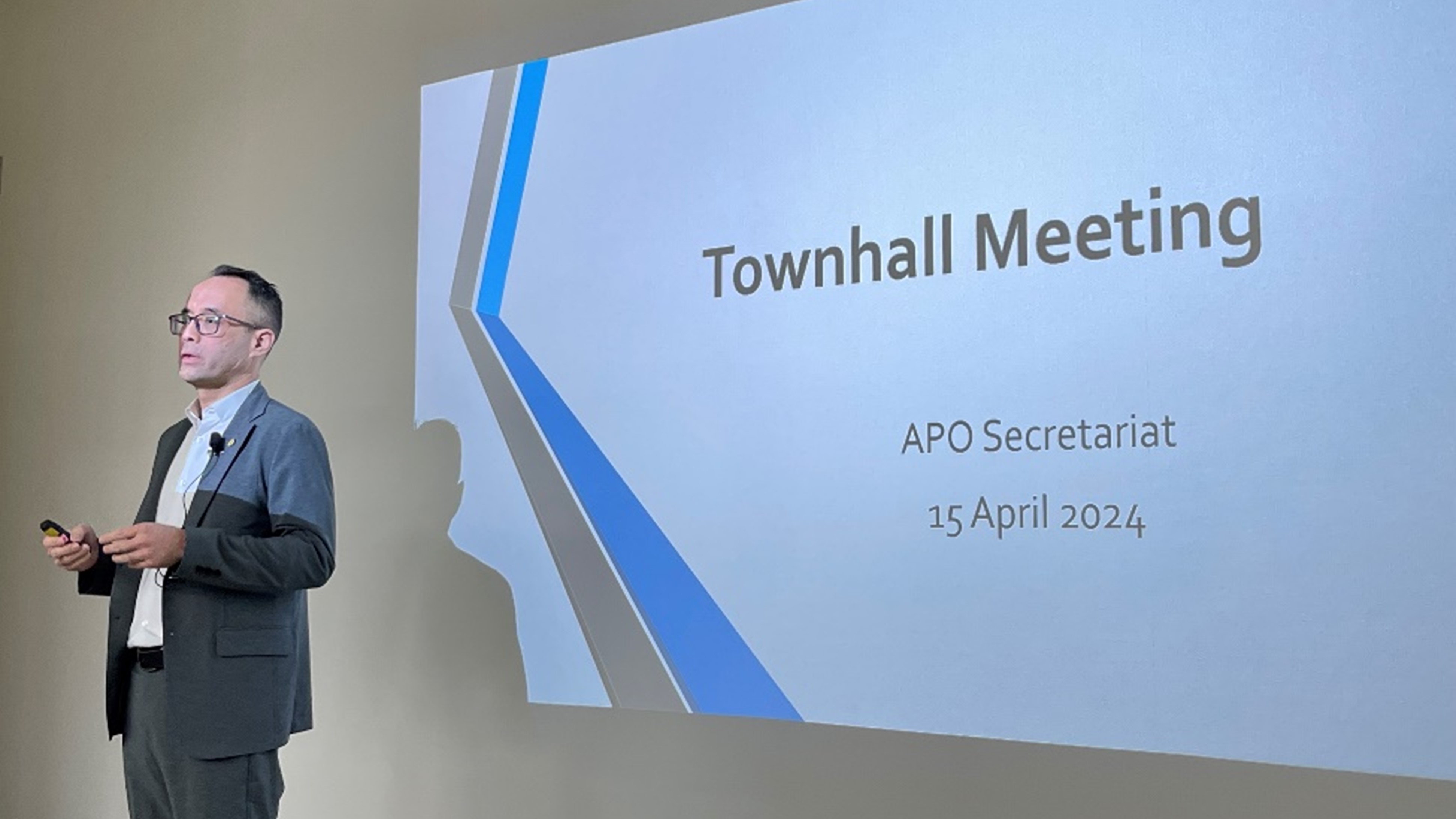
The APO Top Management Forum 2010 was held in Kyoto, and attended by 32 overseas
participants from 17 APO member countries. This is the 26th forum organized by
the APO since its first inception in 1985. The forum invited speakers from various
businesses, including members of the Green Productivity Advisory Committee launched
by the APO in 2003, and offered outstanding examples of environmental management
tools. Participants benefited from insightful information and experiences shared by
the distinguished speakers, to whom I would like to convey my deep gratitude. With
its extensive coverage of state-of-the-art environmental management, I am sure that
participants will be able to adopt the knowledge and tools introduced at the forum to
their own national contexts as a regional contribution to the global environmental agenda.
This publication contains summaries of the presentations on environmental management
for sustainable productivity enhancement. I hope that it helps readers expand knowledge
of the best practices of environmental management by leading Japanese companies.
I would like to express my sincere gratitude to the Japanese Government for the financial
support and to the Japan Productivity Center for its assistance in organizing the Top
Management Forum.
Shigeo Takenaka
Secretary-General
Tokyo, June 2010
|