
Archives: Special Events

46th Session of the APO Governing Body
8–10 June 2004, Yogyakarta, Indonesia

Annual Report of the Secretary-General

by Takashi Tajima,
APO Secretary-General

Dr. Jung-Chiou Hwang, Acting APO Chairman and APO Alternate Director for the Republic of China;
Mr. Brian Singh, the first Vice Chairman and APO Director for Fiji and Mr. Lakshmi Chand, the second Vice Chairman and APO Director for India,
Mr. Kirnadi, APO Director for Indonesia and Director General, Directorate General of Manpower Development and Domestic Placement, Ministry of Manpower and Transmigration;
Distinguished Delegates, Advisers, Observers and Guests, Ladies and Gentlemen:

It is my great pleasure to welcome all of you to the 46th Session of the APO Governing Body. First of all, on behalf of all member countries and on behalf of the APO Secretariat, I would like to express my heartfelt appreciation to the Government of Indonesia for hosting this important meeting. We are honored to have His Highness Paku Alam IX, Vice Governor of Province of Yogyakarta Special Region and His Excellency Dorodjatun Kuntjoro-Jakti, Coordinating Minister for Economy grace the inaugural session with their presence, and would like to thank Mr. Kirnadi, APO Director for Indonesia, for his warm words of welcome and kind support. I would also like to acknowledge with sincere thanks the excellent arrangements made for the meeting by the able staff of the Directorate of Productivity Development, NPO Indonesia, and for the warm hospitality extended to all of us.

Before going on to my report, let me also extend our hearty welcome on behalf of all member countries to Cambodia, which is joining the APO family as its 20th member. I hope that Cambodia will lose no time in embarking on a national productivity movement, in which fellow member countries are ready to share their accumulated experiences.

The 2003 economy in Asia and the Pacific region showed a mixed performance. While newly industrializing economies suffered from economic stagnation, ASEAN and SAARC countries generally achieved relatively high and vigorous growth rates. The dynamic growth of the People’s Republic of China and the positive signs of economic recovery in Japan after the long recession will be key factors making Asian economies sustainable in the years to come. The APO, which has undertaken a wide variety of activities for the enhancement of productivity in the industry, agriculture, and service sectors, has made a significant contribution to the rapid socio-economic development of the region. Our mission is closely linked with changes in the external environment, such as the current wave of globalization. Most member countries have strived to take globalization not as a threat but as an opportunity for creating new businesses by taking advantage of the freer flow of capital, goods and services, manpower, and information across national borders. Globalization has reconfirmed the significance of networking within the APO family so as to deal effectively with various issues of a multinational nature by concerted efforts among member countries. Well aware of the speed and dynamism of globalization, we have laid out a three-pillared vision to set forth a clear direction for the productivity movement. Those pillars are strengthening of competitiveness, harmonization of productivity increases with environmental protection, and maintenance of social fairness. This vision has been translated into action programs that form the five thrust areas of knowledge management (KM), strengthening of small and medium enterprises (SMEs), Green Productivity (GP), integrated community development (ICD), and development of NPOs (DON.) Each of these initiatives has been designed to improve the APO’s services to member countries.

The 2003 Annual Report, which was circulated for your kind approval, provides a comprehensive account of APO activities undertaken last year. Today I am pleased to highlight the major achievements of program activities during 2003 and their future perspectives and also share with you some thoughts on APO policies, strategies, and directions in response to the changing environment and needs of member countries.

I. Program Activities

1. Knowledge Management

Knowledge management (KM) is now in its fourth year as an APO thrust area and has been adopted by a growing number of business corporations in member countries as a corporate strategy to achieve higher productivity and competitiveness. NPOs are also making significant headway in incorporating KM as one of their core competencies. In Thailand and Vietnam, for example, the respective NPOs offer courses and consultancy services to domestic clients so that they can carve out new markets through the creation of innovative products and services.

Future challenges in KM are the expansion of its applications beyond large corporations and organizations to, among others, SMEs. The bottleneck here is the lingering impression that the successful application of KM is synonymous with and conditioned on the availability of an IT platform. This does not necessarily hold true, in light of the Japanese experience. Future KM activities will address its applications among SMEs and handicraft and community-based industries in a non-IT environment, all of which represent the typical conditions and realities of a large segment of economies in Asia and the Pacific. Yet another challenge to KM is how to measure its actual impact on business performance. Toward that end, future projects will also look into measurement methodologies and techniques, hopefully leading to the development of Asian standards.

2. Small and Medium Enterprises

The APO continues to assume an active role in improving the productivity and competitiveness of SMEs. Today’s economic situation, where change and speed are the keys to remaining agile and innovative, has placed intense pressure on SMEs. We have adopted a three-pronged approach to build up their competitiveness, namely: introducing new ideas, techniques, and strategies for more robust operations; facilitating the formation of strategic alliances and networking; and promoting demonstration effects. The first approach is accomplished through the exchange of views and experiences among small entrepreneurs. In 2003, APO projects covered such topics as technological innovations, microfinancing, and entrepreneurship. In this endeavor, it is worth noting that the APO has deliberately targeted specific groups who might otherwise be eclipsed, such as women entrepreneurs. The main vehicle for fostering synergy among SMEs is the APO Venture Business Forum held annually in Osaka, which is the cradle of venture business and entrepreneurship development in Japan. Last year we organized the fourth forum, with the primary intent of facilitating cross-border business matching among SMEs. As in previous years, the forum was a mega-event that attracted more than 20,000 participants. Further, more than 120 business-matching opportunities were offered. Complementing these activities, demonstration projects on strengthening SMEs’ competitiveness were successfully implemented in 2003 in Nepal and Iran. The APO Demonstration Company program is increasingly accepted by NPOs as it provides powerful and inspiring productivity improvement showcases.

The APO will remain committed to assisting SMEs to be innovative and competitive. Bearing in mind our determination to deal with SME issues since the APO’s inception, we are looking at ways to deliver new programs by sharing resources with other multilateral agencies, national governments, local administrations, and NGOs so as to generate greater synergy through cooperation and coordination with them.

3. Green Productivity

During 2003, green productivity (GP) activities continued to expand and deepen while focusing on the four priority areas. These include greening supply chains, resource and waste management, APO Type II Partnership Initiatives, and such specialized areas as occupational and environmental health and safety and ISO14001. I would like to highlight some of the main activities under these priority areas. The greening of supply chains was accelerated with the establishment of the GP Advisory Committee (GPAC) in Japan. Business leaders from more than 40 excellent Japanese firms sit on the committee. Chaired by Mr. Yoichi Morishita, Chairman of Matsushita Electric Industrial Co., Ltd., its role is to advise the APO on how to link businesses for greening supply chains. The four main activities identified include: (a) compiling an eco-products database; (b) organizing an eco-products exhibition in Kuala Lumpur from 2 to 4 September 2004; (c) organizing study missions on eco-businesses; and (d) implementing demonstration projects on greening supply chains. Programs related to resource and waste management were organized under Categories B and C, which include energy efficiency and greenhouse gas emission reduction, solid waste management, GP-ICD, and GP education. Some of the projects have been implemented in collaboration with other international organizations. The energy efficiency project is receiving assistance from the UN Environment Programme, while GP projects for schools and universities will be conducted with support from the United Nations University. I would like to stress the importance of the direct involvement of the business sector to ensure the successful promotion and implementation of GP. Establishment of the GPAC of Japan and collaboration with the Federation of Malaysian Manufacturers are good illustrations of the participation of leading business corporations in our GP activities.

I have a firm conviction that GP should remain a leading movement in the region for future generations. The declaration of 2004 as the APO Year of GP is significant from this viewpoint. I thank you all for creating this historic milestone for the APO. Everyone shares the view that Asia is now the manufacturing center of the world. In order to retain this status, competitiveness in global markets needs to be increased, for which to secure eco-friendliness of products by greening the supply chains will definitely be required as a decisive factor in the very new future.

4. Agriculture and Integrated Community Development

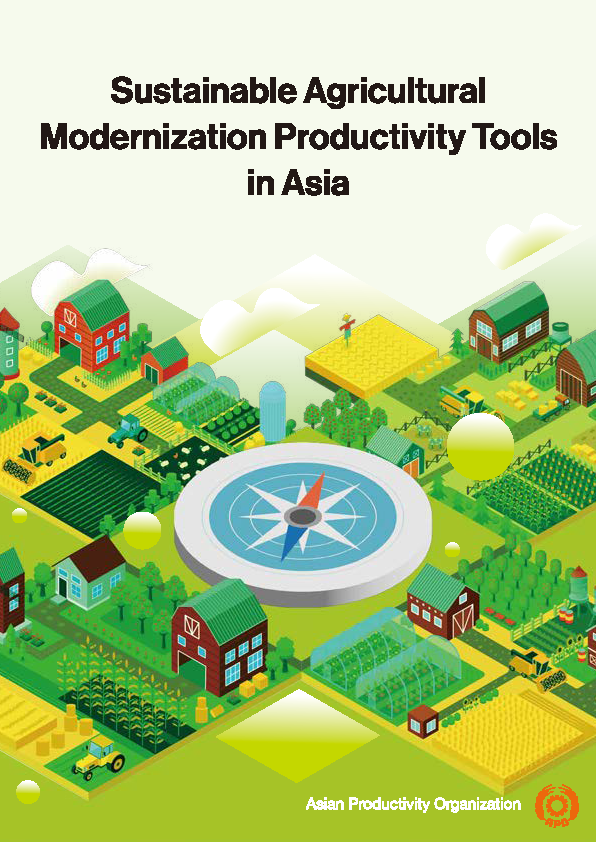
Our Agriculture Program has addressed three major concerns resulting from the rapidly changing global environment in agriculture and rural development. The first concern is the need to improve the competitiveness of agriculture, for which a number of projects were organized in 2003, including the development of entrepreneurship among small farmers and rural women; improvement of the efficiency of marketing particularly through the application of information and communication technology; and enhancement of safety and quality of foods, among others. The second was the promotion of efficient and sustainable utilization of agricultural resources. Such projects as the role of rural women in resource management and the development of sustainable aquaculture were implemented. The third concern is the need to bolster local capacities for community development to alleviate rural poverty. Rural life improvement and community-level infrastructure were some of the projects implemented to respond to this concern. ICD as a thrust area of the APO has been playing a role in enhancing the quality of life of local communities. The successful implementation of GP-ICD demonstration projects in Vietnam has sent an encouraging signal to fellow member countries to emulate. We will make all-out efforts to transfer the valuable Vietnamese experience to other members.

To cope with the impact of globalization, we should continue to strengthen the institutional capacity of member countries for enhancing the competitiveness of agro-industries, promoting sustainable approaches to agriculture, and implementing community-level improvement programs. Rural entrepreneurship, management tools, and improved marketing will be promoted, particularly for SMEs, to generate greater value addition. With regard to sustainable approaches to agriculture, the optimum use of resources will be stressed. To strengthen local capacities, a renewed mindset through participatory and collaborative processes will be emphasized in community-level improvement programs.

I am pleased to note, with deep appreciation, that a special fund from the Japanese Ministry of Agriculture, Forestry and Fisheries will be made available from this year. This will greatly help strengthen our Agriculture Program, primarily for the less developed member countries.

5. Development of NPOs

Strengthening of the NPOs remains a primary mission with cardinal importance, for which both multi-country as well as in-country specially tailored programs have been put in place. The multi-country programs, which address the common needs and requirements of both advanced and developing NPOs, offer a unique opportunity to cross-fertilize innovative ideas and experiences among NPOs. In 2003, the projects offered included Enhancing NPOs’ Core Competence and Best Practices among NPOs. In addition, an APO Liaison Officers’ meeting was held at the Secretariat which proved immensely fruitful as a venue of effective dialogue between NPO officers and Secretariat staff. It was decided to organize this meeting on a regular basis.

The in-country programs are designed to meet the specific needs of individual NPOs to reinforce their institutional capacity and capability. Facilitating a mentoring system between NPOs and expanding their alliances and networking were the focal points of various projects. The national roundtable productivity conferences held in Indonesia and Laos vividly demonstrated the value of these focal points, and those conferences resulted in road maps for the productivity movement in the two countries.

The challenge confronting NPOs pertains to the need to secure support from all stakeholders in society. In reality, however, they are in mixed positions ranging from highly advanced to less developed institutions. The vitalization of the NPOs should therefore remain a top priority for us to tackle in the years ahead. The newly designed APO Fellowship Program intends mainly to facilitate NPOs’ institution building. I want to stress once again that the basic spirit of mutual cooperation among NPOs should remain an unshakable tenet.

6. IT, Information, and Public Relations

IT remains an important tool allowing the APO Secretariat to continue to improve its operational efficiency and cost-effectiveness. Such IT platforms as the APO Web site, APO intranet, and APOnet are now in full operation. In 2003, the APO e-Forum was added as a new platform through which participants could establish networks among themselves for the continuous sharing of information and experience. Last year, the first Web-based conference on "Sustainable Investment Global Network for Asia: SIGN3 Asia" was organized in collaboration with other SIGN3 partners. This was followed by an e-learning training course on ISO 9001:2000 that used the APOnet as a platform. These programs demonstrated that the Internet offers a cost-effective way for delivering training programs. The Secretariat is determined to harness IT to improve its operations, facilitate the sharing of information among staff members as well as between NPOs and the Secretariat, and organize e-learning projects. Starting from this year, NPOs can apply for technical expert services (TES) online.

The APO Asia-Pacific Productivity Data and Analysis remains a major focus of our program activities. The 2003 edition was released in January this year. Every endeavor is being made to build this core competence of the APO into a volume that is valuable to policymakers and business leaders in their strategic thinking, policy formulation, and socio-economic planning. I wish to thank the Directors for helping us select competent national experts for this project who, I am confident, will contribute to upgrading further the reliability and quality of the publication.

II. Policies and Strategies

The last Governing Body Meeting held in Fiji undertook intensive discussion of the APO’s policies and strategies that had an important bearing on its future activities. Today I wish to draw your kind attention to major issues raised during the meeting and report to you the actions taken and the results achieved.

First, the shift of program focus from Category A to B and C was a unanimous decision among the Directors. While the ratio for 2003 programs was far from satisfactory as it was 70% for Category A, 15% for B, and 15% for Category C, the ratio for 2004 will improve to 49% for A, 24% for B, and 27% for C in terms of budgetary allocation. Furthermore, as shown in the Two-Year Plan 2005 and 2006, the number of Category B and C projects in 2005 and 2006 will constitute 55% and 56%, respectively.

Second, we have made substantial improvement in cost savings in terms of both administration and operations. Let me cite some figures. The use of discount air tickets saved us US$950,000 in 2003 compared with 2002, thanks to the cooperation of the NPOs. In addition, considerable savings in telephone bills, postage and mailing, and publications have been made with the introduction of the APOnet, e-books, Web-based projects, and other IT-based activities. Here I would like to stress the importance of the immense benefits in quality aspects derived from the use of IT, although it is difficult to quantify them in an explicit way. Furthermore, staff expenses and office rent are expected to be reduced by $260,000 (28 million yen) and $430,000 (46 million yen), respectively, in 2004. We will keep a firm grip on costs in future as well to meet your expectations.

Third, a review of the APO salary scale has been commissioned to the Hay Group Ltd., an internationally reputed consultant, which has prepared a set of recommendations including the adoption of a new method of salary adjustment. The report was submitted to the Directors for perusal.

The last item relates to the local implementation costs, which are closely linked to our cost-saving efforts. I regret to report to you that member countries’ contribution in this regard has in general shown a declining trend over the years. May I request all member countries to kindly secure the necessary funds to host APO projects.

At the time of the WSM held in Colombo last February, a couple of new proposals were submitted by the delegates in order not only to raise the profile and visibility of the APO and NPOs but also to rejuvenate their functions and activities. One was to designate a yearly event of the APO just as the UN designated this year as the International Year of Rice. The WSM suggested marking 2004 as the APO Year of Green Productivity with a view to unveiling a variety of GP-specific activities this year. I appreciate the kind consent by the Directors to that proposal given through correspondence. The other proposal, introduced by the JPC-SED, was to establish the APO Organizational Excellence Award. This proposal was also submitted to Directors in advance for perusal. While both APO Regional and National Awards, which have already been established, are given to individuals who have made outstanding contributions to the cause of increasing productivity, the newly proposed award intends to give due recognition to business corporations and organizations including public administration that have significant achievements in productivity improvement. I hope that this proposal will also be studied by Directors at this meeting with a forward-looking manner.

The APO works through its network of NPOs in member countries. Within this network, the proactive participation and initiative of all NPOs in sharing their expertise and resources for the common good of the organization remain vital. In this highly networked global society, however, the APO must constantly look beyond its boundaries to establish alliances with national and other international organizations in fulfilling its mission and goals. The last GBM suggested that strategic partnerships be further strengthened at the global level. In this regard, let me express my appreciation to the UN, International Labour Organization, UN Environment Programme, Food and Agriculture Organization, UN Economic and Social Council for Asia and the Pacific, UN Volunteers, Asian Development Bank, Food and Fertilizer Technology Center for the Asian and Pacific Region, Organization for Economic Cooperation and Development, Colombo Plan Secretariat, UBIFrance, State of Hawaii, Regional Institute of Environmental Technology (Singapore), and European Partners for the Environment. I look forward to cementing further the relationships forged over the years and forming new partnerships to spread the gospel of productivity more widely.

This will be my final attendance at the Governing Body Meeting. The APO has experienced reforms and changes in many ways during my tenure over the past six years to respond to the rapidly changing global situation and to cope with new challenges in serving the needs of member countries. First, I would like to point to the considerable improvement in accountability, openness, and transparency of the Secretariat, which is a great tribute to the professionalism of all Secretariat staff. Second, the publication of the APO Productivity Data and Analysis was launched in 200l to fulfill our responsibility as the leading productivity organization in the region. Third, IT application has gained momentum with the introduction of an intranet, extranet, and Web-based projects that have contributed immensely to the speed and cost-effectiveness of APO activities. Fourth, we formulated the three-pillared vision of APO activities when we celebrated the 40th anniversary to show clearly the direction in which we should proceed. Fifth, we have continued to update the thrust areas not only to meet the changing needs of the times and of member countries but also to utilize our limited resources in the most efficient and effective way. Sixth, the Secretariat has been instrumental in the revitalization of NPOs in such countries as Pakistan, Sri Lanka, and Indonesia so that they could play a leading role in promoting the productivity movement at the national level. Seventh, the scope and reach of collaboration with other international organizations and the private sector have intensified the synergistic effects of our activities and increased our visibility globally. Participation in the WSSD in 2002 as well as organization of Eco-Products International Fair and Venture Forum Kansai are cases in point. Last but not least, I feel honored to share the pleasure with all Directors that Lao PDR in 2002 and Cambodia in 2004 became the 19th and 20th new APO members, respectively.

Ladies and gentlemen, the transformation of the APO I have attempted to outline shows steady and dynamic progress over the years. Needless to say, this is due mainly to the unflinching commitment of member countries to the productivity movement and the firm shared conviction that productivity will make our tomorrow better than today. I have no doubt that we have a promising future as long as we can maintain the bedrock spirit of the APO, that is, the spirit of mutual cooperation and trust among member countries. With my departure from the APO coming closer, I wish to express my heartfelt appreciation to all of you for your prudent guidance, valuable cooperation, and kind support extended to me. It has been the greatest honor and privilege of my life to serve the APO as Secretary-General.

Thank you.

backBack to list