
48th Workshop Meeting of Heads of NPOs
16-18 October 2007, Melia Hotel, Hanoi, Vietnam
Statement of Secretary-General
by Mr. Shigeo Takenaka
APO Secretary-General
Ladies and Gentlemen:
On behalf of the Asian Productivity Organization, let me first convey my sincere gratitude to the Government of the Socialist Republic of Vietnam for its generous support and cooperation in hosting this meeting. I would like to express my deep appreciation particularly to Dr. Ngo Quy Viet, APO Director for Vietnam, for his gracious and warm hospitality extended to all of us.
The 49th Session of the Governing Body (GBM) held in June this year in Mongolia endorsed a new biennial budgeting system effective from 2009. The new system calls for the introduction of an approach whereby the total membership contributions to the APO will first be determined by the GBM, based on the Secretariat’s program proposal for two years prepared in consultation with the Workshop Meeting. of Heads of NPOs (WSM). This is a major departure from the past practice, in which the amount of the total membership contributions was automatically decided based on member countries’ GDP, and the program proposals were discussed within the budget already known by the WSM and later by the GBM.
But before going into detail on the procedure for approving the APO 2009 and 2010 Programs, let me explain how we are going to finalize the APO 2008 Program as this is a more imminent issue. In a nutshell, we will treat the 2008 Program just as we did the 2007 Program, with slight modifications.
The Secretariat has already submitted the “APO Program and Financial Estimates for 2008—A review” to this meeting. Once it is accepted by the WSM, we will send it to all APO Directors to receive their endorsement just as we did with the previous year’s program. Only the timing is slightly different this time.
In the past, the Secretariat sought the endorsement of APO Directors by sending the accepted program to them as soon as the WSM had finished. However, this time, as the schedule of the WSM has changed and been brought forward to October, the Secretariat must wait until the provisions for surplus, miscellaneous income, and special cash grants are known. Without the information on these items, we cannot present a full picture of the 2008 Program. We expect to obtain all this information by mid-February and thereafter complete the APO 2008 Program and Financial Estimates for submission to APO Directors. If this schedule is observed, we expect to receive official endorsement of the complete APO 2008 Program by the end of February next year at the earliest. For clarification, this endorsement in February 2008 is sought primarily for the projects to be financed by other income. All other projects have been approved, including TES or OSM programs. Therefore, we will be ready to implement them starting from January 2008.
Regarding the 2009 and 2010 Programs, the Secretariat has also submitted two APO program plans for review. As you might have noticed, the 2009 Program plan document is a detailed one, whereas the 2010 Program plan is only an outline. Both plans consist of projects to be financed by the total membership contributions. Projects that are to be funded by special cash grants and other sources are excludednot included. To make the explanation easier, I will confine myself to the budget process for the 2009 Program for the time being.
The 2009 Program plan presented to you contains a list of projects requiring a 20% increase in the amount of the total membership contributions above the current level. The plan also indicates which projects should be deferred to future yearsconsiderations in case the GBM wants only a 10% increase or no increase in the total membership contributions. Therefore the current meeting is expected to consider review this program plan and to adopt it with or without modifications for submission to the GBM to be held in April 2008.
The Secretariat hopes to receive a significant increase in the total membership contributions in the light of the fact that there has not been any increase for the last three years and there will be none next year. But this meeting is not expected to make decisions on the amount. It is expected to deliberate on whether the program contents and their priorities are appropriate to facilitate the decision at the GBM next year.
That GBM will decide the size of the total membership contributions for 2009 and 2010, which will be equal amounts. After that, the Secretariat will start making preparations for the implementation of the projects contained in the 2009 Program. But because information on funds from surplus, miscellaneous income, and special cash grants will not be available until the middle of February 2009, the final picture cannot be presented until then. The Secretariat has prepared a separate paper to explain the details of the overall planning procedures for the 2009 and 2010 Programs and we will make a presentation on these procedures at the strategic planning exercise session tomorrow.
Now I would like to discuss the contents of our future programs. The directors of the three operational departments of the Secretariat will give presentations on the programs for 2008, 2009, and 2010 and explain their planned activities in greater detail. To avoid duplication, I would like to dwell on three different types of projects that we have recently started to undertake. They represent projects on new topics, projects with new methods, and projects with new outreach contents.
Let me start with projects on new topics. One of the major functions of the APO is to identify emerging issues, trends, challenges, and opportunities that are influencing the productivity drives in our member countries. In this context, some emerging trends are gaining momentum in Asia and the Pacific and they promise to bring exciting breakthroughs. To anticipate the implications of these emerging trends and to tap the opportunities therein, projects on new topics thus constitute an important part of our mission. This year, we organized a number of projects on topics such as mergers and acquisitions, aging society, and nanotechnology. In the field of agriculture, we held one study meeting on biotechnology and another on the application of knowledge management in agriculture. All of them were well received by participants.
It requires more time and effort to organize projects on new topics, since the officers in charge must identify a new set of resource persons, contact them, and persuade them to become involved in our projects. However, encouraged by favorable responses, Secretariat officers plan to organize more projects on new topics in coming years. Intellectual capital, lean Six Sigma, eco-financing, e-waste, applications of nanotechnology in agriculture, and utilization of biofertilizers and biopesticides are some of the new topics on which projects are being planned. If you have any suggestions on new and interesting topics, we would be more than happy to listen to them in this meeting. I believe that promoting projects on fresh and exciting topics will strengthen the research function and think tank role of the APO.
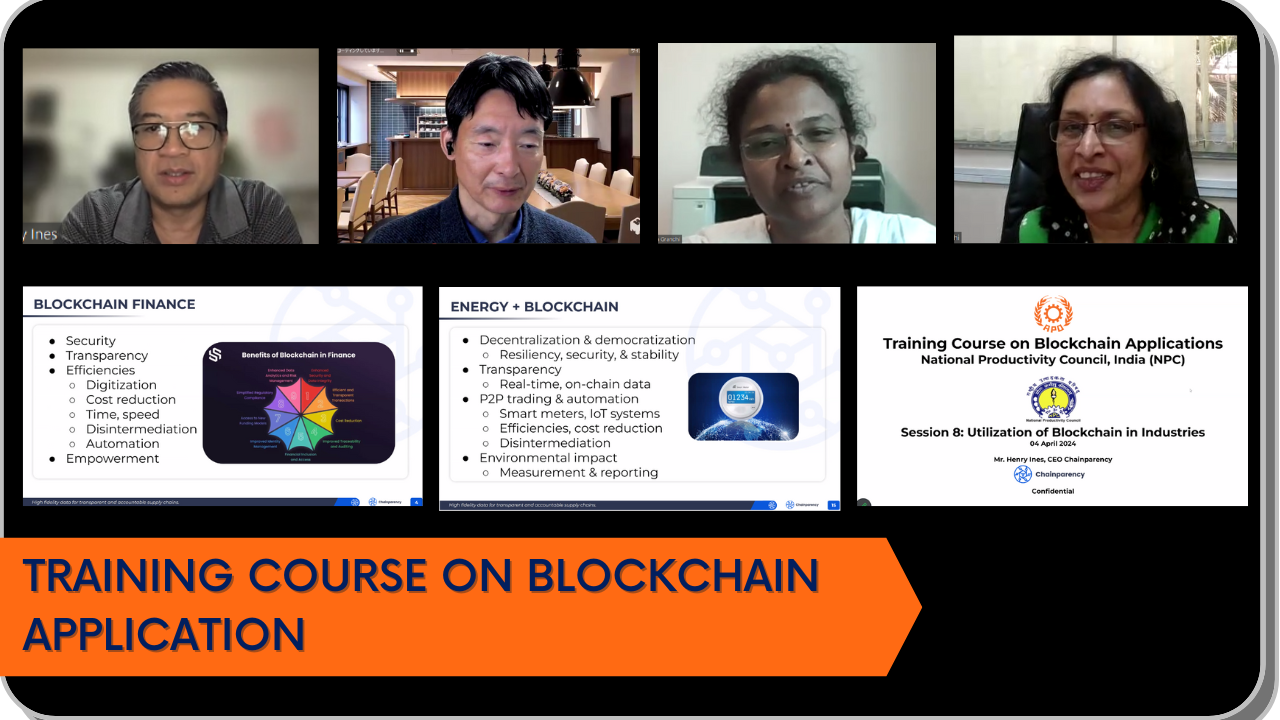
Now I would like to turn to projects with new methods and describe our recent experience in e-learning and in the two-tiered project-based approach. We have been rapidly expanding our efforts to utilize e-learning. Last year, three e-learning projects were organized with 320 participants from 12 member countries. This year, we made a breakthrough and four such projects were implemented on food safety, the Toyota Production System, energy efficiency, and integrated management systems, benefiting more than 850 participants from 15 countries. In 2008, we intend to deliver six e-learning projects on various topics to train more than 1,200 participants, in contrast to regular face-to-face projects in which we can deal with only 120 participants per year based on the normal 20 participants per project.
e-Learning has enabled us to have a wider outreach in member countries in a cost-effective manner. For effective delivery of the e-learning projects, each was implemented in three different phases targeting four to six countries in the same time zone in each phase. To enhance our e-learning projects, we have started to organize follow-up face-to-face projects for the outstanding participants based on their overall performance throughout the e-learning project as well as on their results in the written examination. This is in line with our efforts to raise the quality of participants in face-to-face APO projects.
The APO has also started self-learning Internet-based projects. Based on the successful implementation of the pilot self-learning project on TQM in 2006, we added self-learning projects on integrated management systems, ISO14000, and biomass energy. We are planning to add one more, on medical waste, in 2007. I must thank the participating NPOs for supporting the APO’s e-learning drive. We will continuously improve the contents and delivery of these e-learning projects by reviewing the experiences so far.
To achieve greater multiplier effects, the APO adopted the two-tiered project-based approach starting from last year. It is being expanded this year. One notable example is the “One Village, One Product” (OVOP) Program for the Mekong Region. Multicountry projects were followed by national dissemination seminars in the developing Mekong countries. Cambodia must be congratulated for its efforts in organizing the follow-up conference on OVOP last June. The conference received the highest level of support with the presence of Cambodian Prime Minister Hun Sen at the inaugural session and participation of more than 500 guests including ministers, high-ranking officials, governors, international representatives, and the mass media. This and other successes encouraged us to plan six more projects utilizing this approach in 2008.
As I reported to you at the last WSM in Bali, the Secretariat has also decided to apply a two-tiered approach for the Development of NPOs (or DON) Program through DON Strategy and DON Implementation. I am pleased to report that DON Strategy, which is meant to assess the present and future needs of NPOs, has already been launched. Through the need assessment survey that is currently underway covering 15 member countries, the Secretariat will formulate a roadmap for the long-term capacity building of NPOs in their core competency areas by the end of this year. We will share this roadmap at the Forum for the Development of NPOs to be hosted by Iran early next year.
Under the area called “projects with new outreach contents,” I would like to explain our activities beyond the APO region. Earlier this year, we sent three fact-finding missions to the USA and Europe on knowledge management, innovation, and developing a productivity database. Last June, we organized an observational study mission (OSM) on Business Excellence to Australia. We are launching two more OSMs within this year: one to Switzerland and the other to Canada.
In 2008, we plan to implement more OSMs, including one to Germany on advanced manufacturing technology and another to France on the development of safe, reliable food supply chains. Additional fact-finding missions are also being contemplated. Preparations for sending missions to countries beyond the APO region are often time-consuming and sometimes challenging. They are not as easy as organizing projects within the region where we can always rely on cooperation from NPOs. But we are determined to continue with the policy of learning and benefiting more from other regions.
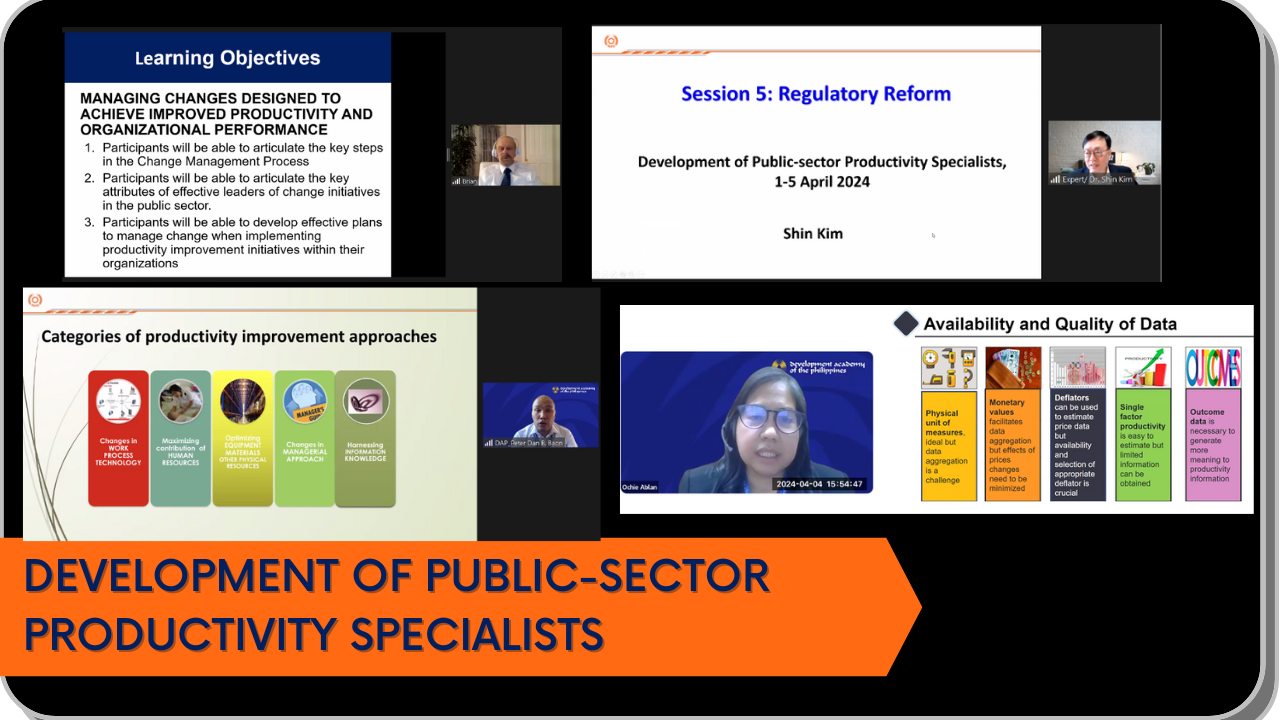
Just as the APO has benefited from others, Africans have learned from the African Program which started in 2006 under a special cash grant from the Japanese government. With the cooperation and inputs of productivity experts from member countries, the APO successfully organized the Basic Training Course for Productivity Practitioners in South Africa last July. Thirty participants from six African countries completed the project. As a follow-up to the basic course, the Advanced Training Course for Productivity Practitioners will be held in the first quarter of 2008. I look forward to the continued support from member countries and suggestions on how to expand the scope of collaboration, which I believe will open doors for mutual progress and development between the two regions.
Before concluding my statement, I would like to put on the record the Secretariat’s deep appreciation to NPOs for hosting this year’s additional projects. At the last session of the GBM in Mongolia, I reported the Secretariat’s new initiative on financial discipline by introducing quarterly settlements and closing of project accounts within three months of their implementation. With this new system, the Secretariat has been able to monitor the disbursement of project funds in a timely manner and to use the financial resources found underutilized at the end of each quarter by developing additional new projects. I thank all the NPOs that readily took up the burden of hosting extra projects on top of those originally slated for hosting by them. I hope to receive the same support from all in the future, as this practice for the optimal utilization of APO resources will continue.
I would also like to convey special thanks to the Vietnam Productivity Centre (VPC), our host for the present meeting. In addition to implementing the WSM, the VPC has begun preparations to host the next Eco-products International Fair (EPIF). The fair is a major event for the APO and the previous ones in Malaysia, Thailand, and Singapore received major attention from inside and outside the Asian region. The forthcoming EPIF will be held in Hanoi from 1 to 4 March 2008 at the National Convention Center, the newest and biggest convention facility in the country. I sincerely thank Mr. Nguyen Anh Tuan, NPO Head, and his able staff, for the excellent coordination and arrangements for this meeting, as well as for the ongoing preparations for the EPIF 2008.
In concluding, I would like to reiterate that the APO is a network of member countries and a network of NPOs in particular. It is a dynamic system that can remain alive only with the active participation and support rendered by all NPOs and member countries. With your full cooperation, the APO can be relentless in the pursuit of higher productivity as it is fundamental to economic progress, prosperity, and the well-being of the people in all APO member countries. Mr. Kohei Goshi, the founder of the productivity movement in Asia and the Pacific aptly stated that productivity is like a marathon without a finishing line. We need your full energies and support in this marathon.
May you all have productive deliberations and a pleasant stay in Hanoi. Thank you.
Back to list