
Special Events50th Workshop Meeting of Heads of NPOs
|
||
![]() |
by Shigeo Takenaka
APO Secretary-General
Ladies and Gentlemen:
It is a great pleasure to be here in this bustling, dynamic city of Manila. On behalf of the Asian Productivity Organization, let me first convey my sincere gratitude to the Government of the Philippines for its generous support and cooperation in hosting this 50th Workshop Meeting of Heads of NPOs (WSM). I would like to express my deep appreciation in particular to Executive Secretary Eduardo Ermita for gracing the inaugural of this WSM with his presence and delivering the keynote address. I also would like to thank Ms. Margarita Songco, the APO Director for the Philippines, and Mr. Antonio D. Kalaw, Jr., President, Development Academy of the Philippines. It has been a very hectic year for the Philippine NPO, since it was also the host of the Eco-products International Fair (EPIF), the fifth in the series, in March this year. The famed Filipino warmth and hospitality contributed greatly to the success of the most recent EPIF, and I am sure that we will enjoy the same during this meeting.
The present WSM is expected to accomplish two major tasks. The first is finalizing the APO Program Plan for 2010. After a review of the projects for the 2010 Program Plan at the WSM in Siem Reap, Cambodia, last year, the Secretariat sent the latest list to member countries prior to this meeting. It contains some modifications, including a few projects dropped from the previous list. This resulted from the continuing trend of high disbursement rates in the implementation of current projects and hence a reduction in the amount of surplus to be carried over to the next year. Given the persistent appreciation of the yen, we may have to brace ourselves when the actual figure comes out at the end of the year. We may be compelled to make more adjustments, probably knocking off a few more projects from the list. Among those on the list, only a few include the implementation dates, with the remainder to be decided. At the concurrent session tomorrow, delegates are therefore requested to reconfirm the hosting of projects and report the schedules to enable the Secretariat to start the necessary preparations.
Another important task for this WSM is to review the proposed priority of projects for 2011 and 2012. The priority list is intended to assist the Directors in determining the total membership contributions for the next biennial budget at the upcoming GBM in Kuala Lumpur. We started this exercise at the 2007 Hanoi WSM with the 2009–2010 budget, and this year, our prioritization exercise is to prepare for the 2011–2012 budget. We will follow the same procedures as we did in Hanoi, except that the Secretariat has refined the criteria for prioritization.
At the Hanoi WSM, the Secretariat ranked the projects according to four prioritization criteria: projects with new topics, contents, or outreach; projects proposed at the GBM/WSM; projects proposed by resource persons and participants; and projects supported by the survey results received from member countries. These criteria remain generally valid. However, to enable more precise ranking, the Secretariat now includes two additional considerations: projects that member countries are committed to hosting; and training courses. Therefore, six criteria guided the prioritization exercise for 2011 and 2012 projects.
The Secretariat assigns priority to projects that member countries have offered to host as a sign of their commitment to the APO and to the cause of productivity in the region as a whole. APO resources are limited, especially with the constraints resulting from the global financial crisis continuing to affect member countries. Therefore, it is gratifying to see member countries volunteer to host APO projects and bear all local implementation costs in a genuine spirit of mutual cooperation. Under the current circumstances, we believe that we should make the most of their generosity.
The Secretariat attaches particular importance to training courses considering their tangible, measurable contributions. Member countries want visible results and have voiced this desire loudly and frequently on many occasions. I have responded to those calls by changing the ratios of project categories.
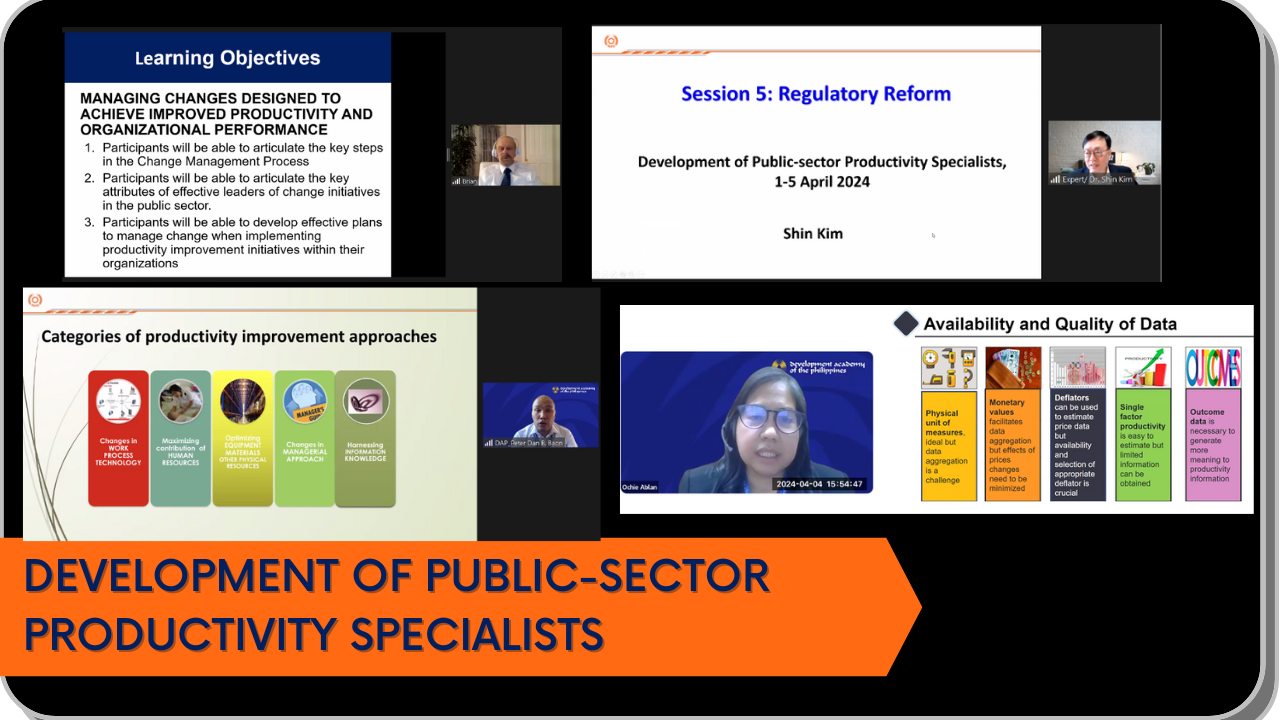
When I first came to the APO, I was struck by the diversity of APO activities. In 2004, we had a combined total of 64 seminars, symposiums, and workshops on various topics but only 12 training projects. While I do not deny the usefulness of the former three types of project, there was a lack of balance in the numbers. I felt that we lacked the specific focus and targets needed to deliver the required tangible results. Therefore, I gradually reorganized our activities by making training courses the main vehicle for imparting skills and knowledge to participants. By 2008, the combined total of seminars and workshops had been reduced to 24, while the number of training courses had increased to 24, including e-learning courses.
We have not only worked to increase the number of training courses but also to improve their quality. Now all APO training courses include examinations to gauge their quality and the level of learning by participants. Training courses leading to certification have also been added. We now take the extra step of producing manuals to accompany many training courses. The manuals are provided free of charge to participants or anyone interested in the subject in the form of downloadable e-books available on the APO Web site. In other words, APO training courses have become more focused, more useful learning experiences. Hence, they are assigned additional points to help raise their ranking in the prioritization lists.
By including these two additional considerations, projects are now ranked with clearer, more logical justification. The Director of the Secretariat Research and Planning Department will present more details of the prioritization criteria later today, such as the weight allocated to each criterion. Suggestions to change or modify the proposed ranking will be discussed during the concurrent sessions tomorrow.
In addition to the 2011 and 2012 projects, I would like to take this opportunity to summarize what we have achieved and what we have not on the program side since I joined the APO in 2004. In particular, I would like to focus on our efforts to: 1) enhance the capacity building of NPOs; 2) take advantage of new opportunities provided by IT; and 3) undertake more projects that generate visible, measurable impacts.
To enhance the capacity building of NPOs, we have finally translated the idea of shifting the emphasis from Category A projects to Category B projects into reality. In 2004, there were 66 Category A projects, but only 30 Category B projects. In 2007, the number of Category B projects rose to 68, outnumbering those in Category A for the first time. This trend continued in 2008 and 2009. Delays in achieving this had been criticized either directly or indirectly at both GBMs and WSMs until just a few years ago. I am very glad that the issue has been settled in a way that satisfies the needs of member countries.
We have also taken two new initiatives to bolster Category C projects: in-country programs for developing productivity professionals; and two-tiered projects. Three pilot in-country projects were held in IR Iran, India, and Pakistan last year, and we completed similar courses in Fiji, Indonesia, and Cambodia this year. Three more courses are scheduled toward the end of 2009 for Thailand, Lao PDR, and Bangladesh. Thus, by the end of this year, we will have trained more than 200 productivity practitioners, of whom 60% are from NPOs.
A two-tiered project combines a multicountry project with follow-up national programs in several member countries. We first experimented with this idea in 2006 in a project on energy efficiency and renewable energy for SMEs organized jointly with the ASEAN Foundation. At that time, a regional training workshop was followed by national seminars in five different ASEAN members. In 2007, we tested the idea with a One Village, One Product movement project in the Mekong region financed with a special cash grant from the Government of Japan. With those successful experiences under our belt, we officially launched the two-tiered scheme in mid-2008 with three multicountry projects. From those three multicountry projects, we organized a total of nine national-level follow-up projects this year, attended by a total 464 participants, or an average of about 51 individuals per participating country. We maintained the same number of three multicountry projects in 2009 and are aiming for nine to 12 national-level training courses as follow-ups. Most are expected to be implemented in 2010.
The second area I would like to report on is our initiative to make full use of IT. Our star performer here is e-learning courses. Quite a few member countries were caught off-guard during the initial e-learning offerings as they were unfamiliar with the new mode. But acceptance quickly followed as e-learning courses proved effective in attracting a large number of participants, which otherwise would not have been possible. The record is impressive. In 2008, we organized five e-learning courses, each consisting of three phases, with each phase involving five countries in the same or neighboring time zones. As we can comfortably accommodate 20 participants in each country, theoretically we can train 1,500 participants each year. The actual figure for 2008 was close to 1,450.
Success has not been measured in terms of numbers or cost alone. We take pride in the contents and delivery of our e-learning courses. APO officers have developed a successful recipe for interactive, lively e-sessions. They lead and facilitate the sessions to allow a smooth blending of lectures by experts with observational visits to local facilities, group discussions, and country presentations. Our e-learning courses are unique because they are followed by traditional, face-to-face training courses featuring advanced versions of the topics. As a result, we are always able to recruit motivated, eager trainees. A total of 331 participants from 14 member countries enrolled in the e-learning course on energy auditing conducted in May, June, and July this year, of whom some 60% were from the private sector. Moreover, almost 95% rated the course as either “as expected” or “more than expected.” This is a surprisingly high percentage given the fact that some participating countries experienced disconnections caused by technological glitches.
The third area that I would like to address is efforts to undertake more projects that generate visible, measurable impacts. We can safely say that the Eco-products International Fairs (EPIFs) in the last five years contributed more to the visibility of the APO and the host NPOs than any other project so far. The latest EPIF in Manila, for example, attracted more than 80,000 visitors and popularized the concept of eco-products and eco-services in the Philippines. Some previous EPIF host countries have either organized their own national eco-products fairs or are contemplating doing so in the near future. This indicates the extent to which the EPIFs have increased the awareness of the need to utilize environmentally friendly products and services.
As I stated on a number of previous occasions, the APO Productivity Databook series represents an important breakthrough for the APO in terms of producing credible, comparable productivity data on member countries. We are continuing to make improvements in its methodology and coverage and recently released the Asian Growth Map on the APO Web site which will give the most updated quarterly growth statistics on member countries’ GDP. We are hoping that the data will provide useful information for analyzing regional growth and identifying potential investment opportunities. Along with our plan to strengthen the institutional capacities of member countries to compute their total factor productivity, the Secretariat is presently assisting the Mongolian Statistics Office. In August, we dispatched a mission to Indonesia for the same purpose, and a similar mission was sent to Fiji earlier. When all these efforts bear fruit, their impact on member countries will be significant.
In agriculture, increasing emphasis has recently been given to food safety. In the last five years, the number of projects related to food safety has increased substantially, and the number of participants has also increased dramatically, thanks to the availability of new methods such as e-learning and in-country programs. We expect that the number of participants attending the 50 such projects from 2004 will reach more than 1,600 by the end of 2009. To cope with this increasing demand, this year we hired an expert on food safety with five years of experience at the Codex Alimentarius Commission as an agricultural program officer. We believe that the APO’s impact on member countries in this area will be even greater in the future.
I enumerated areas in which the APO has achieved tangible results in the last five years. Project impact evaluation and the pilot center of excellence (COE) are different in the sense that they are still very new and no definite results have been confirmed. However, an evaluation team was sent to Indonesia, Thailand, Sri Lanka, and India in June and July this year, and local NPOs were actively involved and lent cooperation to the evaluation effort. The team conducted additional interviews by visiting resource persons in Singapore and the Philippines. The team’s tentative findings so far show that our projects generally benefited the participants, their departments, and their organizations. The Secretariat will present the gist of the findings in another session.
We devised a two-year plan to establish a pilot COE focusing on business excellence with its center in SPRING, Singapore. Now Singapore is compiling a database of experts on business excellence and quality awards, and the Secretariat is conducting a survey on the impact of quality awards on business. With the cooperation of all interested parties, we are sure that we will see good results soon.
In my first appearance as Secretary-General at the GBM in Tokyo back in 2005, I emphasized the need to strengthen ties with other international or productivity-related organizations. In line with this thinking and in search of new knowledge and insights, we have increased the number of study missions to North America and selected countries in Europe. We continue to have good working relationships with the OECD and ADB. We ventured into a new relationship with PAPA and other organizations in Africa. But looking back at our record, I cannot help feeling that we could have done more. Time permitting, I would like to explore that possibility during the rest of my second term at the APO.
Many of the initiatives I explained are only two or three years old. This is partly because under the two-year rotating budget system many new initiatives could not be introduced unless old projects which had been proposed two years earlier had been completed. It is also partly because during my first two years or so, organizational and administrative reforms were the main priority. The relative newness of these initiatives means that there is still a lot of room for improvement in all of them. I am therefore hoping that for another two years or so, the main features of program composition will remain as they are.
I should point out that these initiatives originated from ideas expressed at WSMs and GBMs. For example, the need to shift the emphasis from Category A to Category B and C projects was included in the report of the WSM held here in Manila in 2003. The 2004 WSM urged us to make more use of IT. At the 2005 WSM, the idea of conducting a survey to determine member countries’ preferences was proposed and now that is a part of the standard procedure to determine the priority of different projects. The 2006 WSM discussed ways to strengthen national food safety standards. The point I want to make is that WSMs as well as GBMs have been a source of good ideas and inspiration for all of us in the APO and particularly for the Secretariat.
We will celebrate the 50th anniversary of the APO in 2011. That means that we must think ahead and explore new actions to make our organization more effective and relevant in the next half-century. I am sure that this WSM will provide a good opportunity to share views among yourselves and with the Secretariat on this issue.
Thank you.